
- 13/10/2026
- Dr. Sumit Chaudhari
- 0 Comments
- Andrology
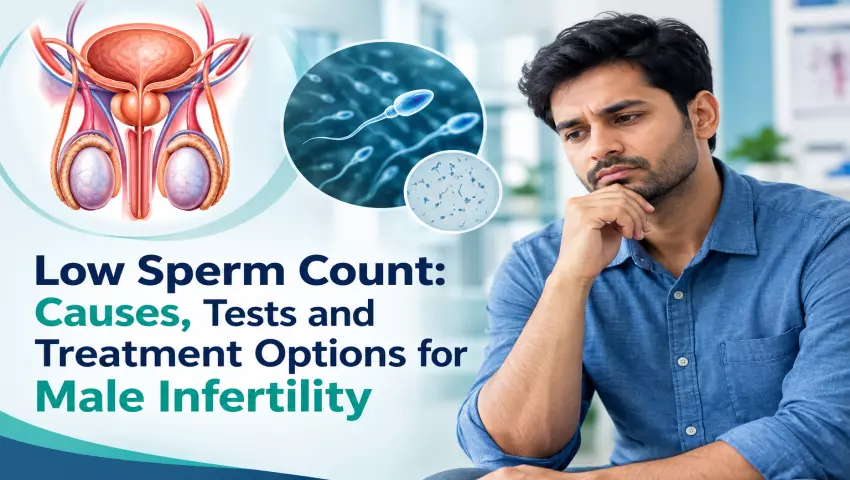
Low Sperm Count: Causes, Tests and Treatment Options for Male Infertility
Low sperm count is one of the conditions that may contribute to male infertility. Many men discover the problem only after undergoing a semen analysis because low sperm count usually does not cause obvious physical symptoms.
Male fertility depends not only on the number of sperm but also on sperm movement, shape, reproductive tract health and other factors.
An appropriate male fertility evaluation can help identify potentially treatable causes.
What Does Low Sperm Count Mean?
Sperm are produced in the testicles and released in semen during ejaculation.
A semen analysis evaluates several parameters, including:
- Sperm concentration
- Total sperm count
- Sperm motility
- Sperm morphology
- Semen volume
A low sperm count means fewer sperm are present in the semen than expected.
However, fertility cannot be assessed by sperm count alone.
What Causes Low Sperm Count?
- Varicocele: Varicocele is an enlargement of veins around the testicle. It can affect sperm production in some men and may be associated with reduced sperm count or quality.
- Hormonal Problems: Hormones produced by the brain and testicles play an important role in sperm production. Abnormal hormone levels can reduce sperm production in selected patients.
- Genetic Causes: Certain genetic conditions can interfere with sperm production. Genetic testing may be recommended in selected men with very low or absent sperm counts.
- Blockage of the Reproductive Tract: Some men produce sperm normally but have a blockage preventing sperm from reaching the semen.
- Medicines and Medical Treatments: Some medicines, chemotherapy and other treatments may affect fertility. Patients concerned about fertility should discuss their current and previous medicines with their doctor.
- Testicular Problems:
Sperm production may be affected by:
- Previous testicular injury
- Infection
- Undescended testis
- Testicular surgery
- Certain medical conditions
Can Lifestyle Affect Sperm Count?
Lifestyle factors can influence general reproductive health.
Potential factors include:
- Smoking
- Excessive alcohol consumption
- Obesity
- Drug use
- Excessive heat exposure
- Poorly controlled chronic diseases
Improving general health may support fertility, but lifestyle changes cannot correct every cause of low sperm count.
How Is Low Sperm Count Diagnosed?
The main initial test is a semen analysis. Because sperm parameters can vary over time, a repeat test may sometimes be advised.
The andrologist may also review:
- Medical history
- Previous fertility history
- Sexual function
- Testicular examination
- Previous surgery or infections
- Current medicines
Additional investigations may include:
- Hormone testing
- Scrotal ultrasound
- Genetic investigations
- Other specialised fertility tests
What If No Sperm Are Found in Semen?
Complete absence of sperm in the semen is known as azoospermia.
It can broadly occur because:
- Sperm production is significantly reduced, or
- A blockage prevents sperm from reaching the semen.
Determining which type is present is important because treatment options differ.
Treatment for Low Sperm Count:
Treatment depends on the underlying cause.
- Treating Medical or Hormonal Causes: Specific hormonal or medical problems may be treated when identified.
- Varicocele Treatment: Selected men with clinically significant varicocele and fertility problems may be considered for treatment.
- Surgery for Obstruction: Some reproductive tract blockages may be treated surgically depending on their location and cause.
- Assisted Reproductive Techniques: Couples may be advised techniques such as:
- IUI
- IVF
- ICSI
The most appropriate treatment depends on both male and female fertility factors.
TESA, PESA and Micro-TESE:
When sperm are absent from the ejaculated semen, sperm may sometimes be retrieved directly from the reproductive tract or testicle.
- PESA: Percutaneous Epididymal Sperm Aspiration retrieves sperm from the epididymis.
- TESA: Testicular Sperm Aspiration retrieves sperm directly from testicular tissue.
- Micro-TESE: Microdissection Testicular Sperm Extraction is a more specialised procedure used in selected men with severe sperm-production problems.
Retrieved sperm may be used as part of assisted reproductive treatment where appropriate.
When Should You Consult an Andrologist?
Consider an evaluation if:
- A semen test shows low sperm count
- No sperm are found in semen
- Pregnancy has not occurred despite trying
- There is a history of testicular injury or surgery
- Varicocele has been diagnosed
- You have concerns about sperm quality
- Previous fertility treatment has not been successful
Male Infertility Treatment in Pimple Saudagar, Pune:
Dr. Sumit Chaudhari provides male infertility evaluation and treatment planning at Usha Urology & Andrology Clinic in Pimple Saudagar, Pune.
His andrology services include evaluation of low sperm count, sperm quality concerns and sperm retrieval procedures such as TESA, PESA and Micro-TESE.
Frequently Asked Questions:
No. Fertility depends on several factors, and treatment options vary according to the cause and the couple’s overall fertility assessment.
It may improve when a treatable underlying cause is identified, although this varies between patients.
Not always. A repeat semen test may sometimes be recommended because sperm parameters can vary.
No. Sperm concentration, motility and morphology are different parameters and may be affected independently.
An andrologist or urologist with expertise in male reproductive health can evaluate low sperm count and male infertility.